
Skip to content
electricistaentrevegas.comReport a fault
Menu

Water in the electrics: what to do and how we restore your installation

A neighbour's leak, a burst pipe, a torrential storm (gota fría) or seepage through the façade can bring water into sockets, fuse boxes and light fittings. We cut the power to the area, dry it out and test before reconnecting anything.

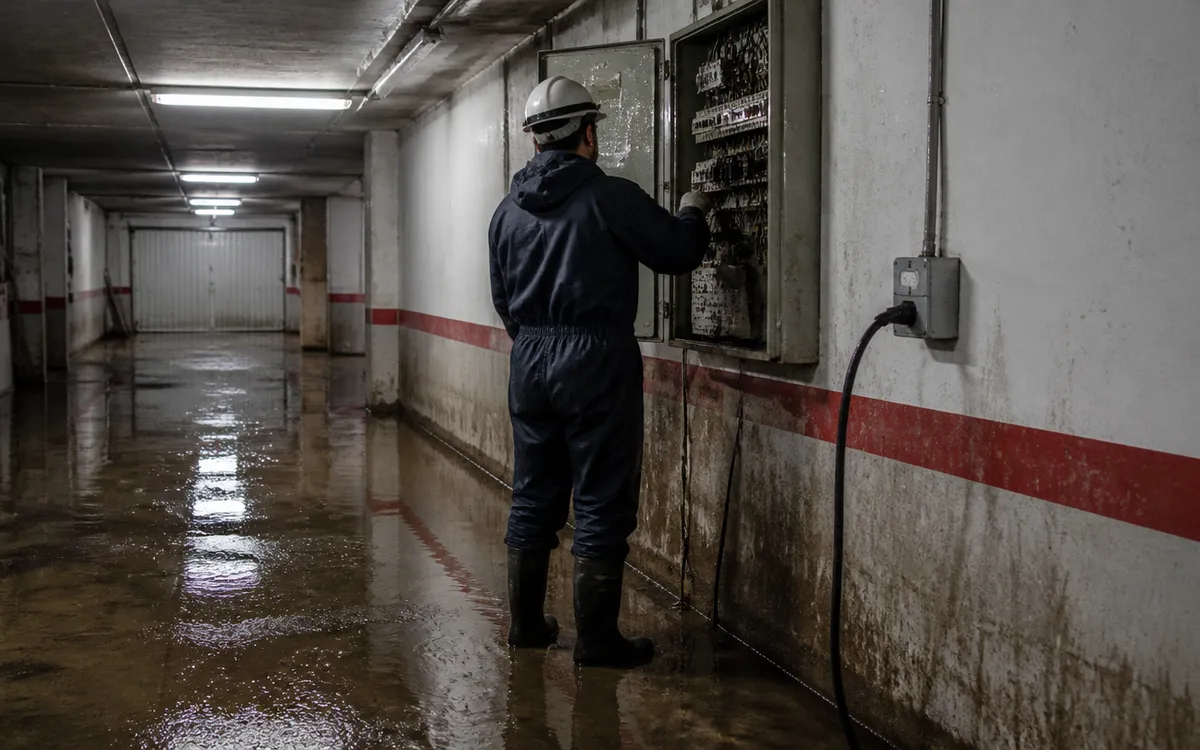
Checking an electrical panel after water got into a garage's electrics

Electrical hazard emergencies

Water in the electrics: what it involves

Water reduces insulation, opens paths for current and corrodes terminals and contacts. A junction box with water in it can give you a shock when you touch the wet wall, a flooded socket can cause a short circuit and a wet fuse box can leave the whole home without power or, worse, keep feeding power where it shouldn't.

We see it mainly in three situations: leaks inside the building (the flat upstairs, a downpipe, a pipe that bursts inside the wall), torrential rain and gota fría storms that flood ground floors, garages and commercial premises, and slow seepage through roofs, terraces or façades that ends up in ceiling lights or wall boxes.

That is why we always follow the same order: first cut the power, then dry and test, and only at the end switch the power back on.

Cases and jobs

Leaks, floods and seepage we deal with

The ones we are asked for most, with an explanation, followed by the other jobs in this service.

Water in a socket: what to do

If a socket has got wet from a leak, while mopping or from rain coming in through a window, don't use it or unplug anything with damp hands: switch off that circuit's breaker or the main switch from a dry spot. We dismantle the socket, dry the box, check whether the water has reached the conduit and other sockets on the same circuit, and test the insulation. If the socket or the terminals have corroded, we replace them, and if water is still getting in, we point out where it is coming from so the leak can be fixed before we close up.

Ceiling light dripping from a neighbour's leak

This is very common in flats: water from the bathroom or kitchen upstairs collects in the false ceiling and finds its way out through the ceiling light or the recessed spotlights. We cut that lighting circuit, take down the affected fittings, empty and dry the boxes and drivers and check the wiring in the false ceiling. Once the leak has been repaired and the ceiling is dry, we test and refit the lights, or replace the ones that can't be saved.

Wet fuse box

When water has reached the fuse box itself, don't touch it or try to switch off the protective devices if you have to stand in water to reach it. We cut the power upstream of the fuse box and, if that isn't possible from inside the home, ask the distribution company (distribuidora) to cut the supply. We dismantle, dry, check busbars and terminals and replace the circuit breakers and RCDs that have been in contact with water, because they can no longer be relied on to work properly.

Ground floor, garage or premises flooded by heavy rain

After a storm or a gota fría, on ground floors, in garages and in street-level premises the water reaches low sockets, gate motors, sump pumps and sub-distribution boards. We isolate the whole flooded area, disconnect everything that has been submerged and first restore the lighting and the circuits that are high up and dry. Once the water goes down, we check or replace sockets, boxes, motors and cables below the waterline it left.

Machinery or cold rooms affected by water

In industrial units, warehouses and shops, a flood can reach compressors, cold rooms, machinery control panels or commercial ovens. We separate each piece of equipment from the installation, test the insulation of its supply lines and, before starting anything, test the equipment itself. We first restore whatever lets you keep working or keep your stock refrigerated, and make a note of what needs the manufacturer's technical service.

More cases we deal with

  • Water in a wall junction box

    A pipe running next to the electrical conduits leaks and the water gets into the box. We open it, dry it, remake the joints and replace the corroded section.

  • Seepage from the terrace reaching the spotlights

    In penthouses and flat-roofed houses, water gets through the waterproofing and appears in the recessed spotlights. We isolate the circuit and check each spotlight and its box.

  • Terrace sockets and wall lights wet from the rain

    Outdoor sockets without covers or wall lights with worn seals. We replace them with weatherproof models and check that the outdoor circuit has its own RCD.

  • Submerged sump pump that won't start

    In basements and communal garages, if the pump isn't pumping, the water keeps rising. We check its supply, the float switch and the protection and get it pumping again.

  • Washing machine or dishwasher leaking onto the socket

    The socket is behind the appliance and the leaking hose reaches it. We replace the socket, raise it higher if necessary and check the earth.

  • Electric water heater dripping onto its connection

    A valve or fitting leaking right above the connection box. We disconnect the water heater, dry everything and replace the damaged connection.

  • Meter room or communal garage with water

    We isolate the affected communal services, notify the distribution company if the water reaches the central meter bank and restore lighting and pumps.

  • Flooded pool pump house

    Rain or a leak from the filter leaves the pool's control panel under water. We cut its supply, dry the panel and check the pump, timer and lights.

  • Coastal apartment with seepage after months closed up

    Damp and small leaks that nobody sees over the winter; when you open up, the RCD won't stay on. We locate the affected circuits, dry them and replace corroded fittings.

  • Basement or storeroom sockets below flood level

    We move sockets and boxes above the height the water usually reaches and replace them with weatherproof ones so you don't lose everything in the next storm.

  • Shop sign or façade spotlights with water inside

    Water inside the housing of the sign's power supply or the spotlights. We isolate the line, dry it and replace the power supply or the seals.

What to do if water gets into the electrics

First of all, don't walk into a flooded room if there are sockets, extension leads or appliances under water and you don't know whether they are live. Water conducts, and you can get a shock without touching anything electrical.

If the fuse box is in a dry area and you can reach it without stepping in water, switch off the main switch with dry hands. If the fuse box is in the wet area or the water has reached it, stay away: ask the distribution company to cut the supply and write to us. If the leak is from the home's own water supply, also turn off the stopcock.

  • Don't use hairdryers or heaters to dry boxes or fittings.
  • Don't switch the main switch back on until it has been checked, even if it looks dry.
  • Take photos of the water level and the affected equipment for your insurance.

Why waiting for it to dry out isn't enough

Even if a socket or a light fitting looks dry on the outside, water can stay inside conduits and boxes for days. Flood water also carries mud and salts, and on the coast it brings salt from the sea air: when it evaporates it leaves conductive residues behind and the terminals and contacts start to corrode.

That is why we never restore power by eye. We test the insulation of each circuit between conductors and earth and only bring back into service those that give correct readings; the rest stay disconnected until the cable, fittings or protective devices are replaced. If the water has reached the fuse box, we replace the protective devices that got wet: an RCD that has been in water no longer offers the same level of safety.

Damp and outdoor areas: what the regulations require

Spain's Low Voltage Electrotechnical Regulation (REBT) distinguishes between damp and wet locations (ITC-BT-30) and requires materials with the appropriate degree of protection against water, the IP rating, as well as conduits and boxes that keep moisture out. In garages, basements, terraces and outdoor areas this means weatherproof sockets and light fittings, boxes with cable glands and properly sealed conduits.

When we repair after a flood, we take the opportunity to raise the sockets in garages and ground floors where possible and to put outdoor and indoor areas on separate circuits, so that seepage in the garden doesn't leave the whole house without power.

What you get

What you get when we do it

  • Nothing goes back on untested

    No circuit gets its power back without first passing an insulation test.

  • The essentials first

    We restore the fridge, lighting, pumps and equipment that can't stop first.

  • We replace what can't be saved

    Corroded protective devices, fittings and cables come out; whatever is fine stays.

  • Damage report

    We give you a written record of what the water affected and what we replaced, with photos for your insurer.

How we work

How we fix it, step by step

  1. Let us know

    Tell us through the form or by email how far the water has reached and whether the fuse box is affected.

  2. Power cut and isolation

    We cut the power to the wet area and separate the affected circuits.

  3. Drying and testing

    We dismantle, dry and test the insulation of each circuit.

  4. Back into service

    We restore power to whatever is sound and repair or replace whatever is damaged.

Frequently asked questions

Questions about water in the electrics

What should I do if water gets into a socket?

Don't touch it or unplug anything connected to it. Switch off that circuit's breaker or the main switch from a dry spot and with dry hands, and don't try to dry it with a hairdryer. Write to us: we will dismantle the socket, check whether the water has reached the box and the conduit and test it before it is used again.

The fuse box has got wet. What should I do?

Stay away if you would have to step in water to reach it. If you can't switch off the main switch safely, ask the distribution company to cut the supply, and write to us. Protective devices that have got wet are replaced, because they can no longer be relied on.

Water is dripping from a ceiling light. Is it dangerous?

Yes. The water is in contact with the lamp holder or the driver and can give you a shock or cause a short circuit. Turn it off, switch off the lighting circuit breaker, don't touch the light and put a bucket underneath without brushing against the fitting. Let the neighbour upstairs or the property manager know so they can stop the leak.

Does insurance cover electrical damage caused by water?

Many policies cover water damage and the electrical damage that results from it, subject to their terms. We give you a report of what the water affected, the readings taken and what we replaced, so you can submit it with your claim.

Do you deal with floods in communal garages and ground floors?

Yes. We isolate the affected communal services, restore the lighting and sump pumps as soon as it is safe and check gate motors, sockets and sub-distribution boards. We coordinate the work with the property manager or the president of the residents' association.

You may also be interested in

Related services

Earth leakage

Electric shocks from the shower, taps, appliance casings or railings: we trace the current leak, isolate it and check the earthing.

See the service

No power at home

Total or partial outage in a home, residential building, shop or warehouse: we find where the current is interrupted and restore the supply.

See the service

Communities of owners

Stairwells, garages, pumps, pressure booster sets, emergency lighting and door entry systems: we repair faults in your building's communal services.

See the service

Is it happening right now?

Tell us what is happening, where it is and a phone number. In the meantime, if there is a burning smell, sparks or water, switch off the main switch only if you can do it safely.