
Skip to content
electricistaentrevegas.comReport a fault
Menu

Electric car charging point installation

We fit the charger at your villa, in your space in the community garage or at your business, with the line, protection and documentation required by ITC-BT-52, and set it to the power you have.

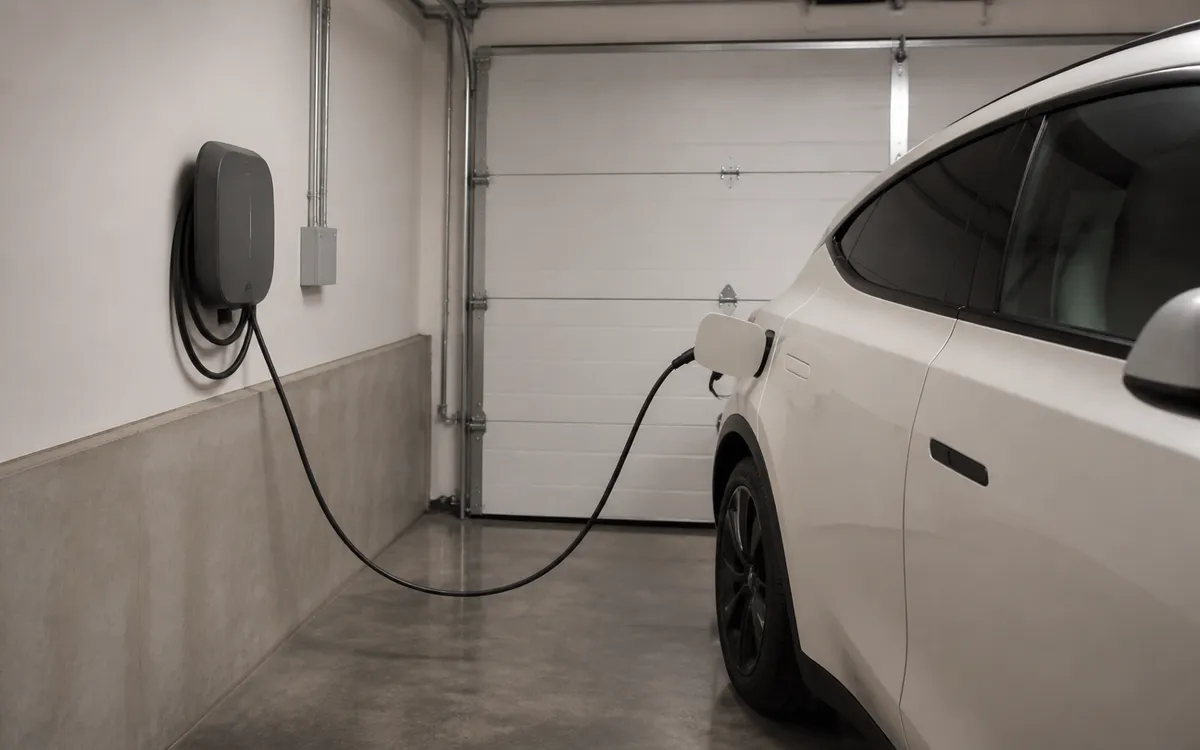
Wallbox in a villa garage as the electric car charging point

Installations and rewiring

EV charging point: what it involves

Charging the car every day from a normal socket is slow and forces a socket and a cable to work flat out for hours on end, which they aren't designed for. A charging point, the wallbox, with its own circuit and protection, charges faster, safely and at the times of day when electricity is cheapest.

These installations are governed by ITC-BT-52 of the Low Voltage Electrotechnical Regulations (REBT). We choose the most suitable layout for your home or garage, calculate the line, fit the protection, install and set up the charger and leave the installation documented with its certificate.

We work in detached and semi-detached villas in and around Murcia, in community garages under blocks of flats, in coastal apartments with a garage space and in shops, hotels or companies that want to offer charging to customers and staff.

Cases and jobs

Charging points we install

The ones we are asked for most, with an explanation, followed by the other jobs in this service.

Wallbox in the garage or driveway of a villa

The most common installation: the charger on the wall of the garage or porch of a detached or semi-detached villa. We run a dedicated line from the home's consumer unit with the cable size calculated for the charger's power, fit its circuit breaker, RCD and surge protection, mount the wallbox and set it up. If the contracted power is tight, we add dynamic load management so the charger reduces its consumption when the house needs more.

Charging point in a community garage space

To charge in your space in a community garage you don't need a vote at the owners' meeting: you just notify the community in writing beforehand, and the cost of the installation and the electricity you use are paid by you. The most common approach is to run a line from your meter, in the meter room, to your space, in its own conduit through the communal areas, so what you use is billed on your contract. We fit the protection and the charger and help you with the letter to the community.

Charging pre-installation in a community garage

Communities that want to lay a main conduit through the communal areas of the garage so each owner can later connect their own charging point with no further work, as ITC-BT-52 already requires in new buildings. We design the route and size the conduit and, if the community prefers, propose a collective installation with secondary meters and a system that limits the load so the building's main line isn't overloaded.

Charging the car with solar panels

Homes with self-consumption solar that want to charge with what their panels produce. We install chargers that read the home's production and consumption and adjust the charging power to use the surplus, and we combine this with night charging when the sun isn't enough. We check that inverter, consumer unit and charger work together.

Charging points for a shop, hotel or company

Car parks at shops, restaurants, hotels and industrial units that offer charging to customers, guests or their own fleet. We calculate how many points the installation can take, plan how power is shared between them and, if needed, the switch to three-phase or a power increase, and install chargers with access control and consumption metering.

More cases we deal with

  • Charger for a coastal apartment with a garage space

    Second homes in La Manga, Torrevieja or Orihuela Costa with a space in a community garage: a line from the apartment's meter and a charger protected from the garage damp.

  • No more charging from a household socket

    If you charge every day with the emergency cable from a household socket, the minimum is a socket on its own circuit with its protection, and the recommended option is a wallbox. We install it and remove the extension lead or power strip you were using.

  • 11 or 22 kW three-phase charger

    For cars that accept three-phase AC charging, in industrial units or homes with three-phase power. We calculate the line and protection and check that the phases are balanced.

  • Dynamic load management

    A sensor in the consumer unit measures what the house is using and the charger adapts moment by moment, so you can charge without the power tripping and without contracting more power than you need.

  • Two electric cars in the same house

    Two chargers, or one with two outputs, sharing the available power, with the line sized for both.

  • Outdoor or open-air parking charger

    A wallbox on an outside wall or a post, with an enclosure and protection suitable for rain and direct sun, and the line underground in conduit when the parking area is away from the house.

  • Townhouse garage with the consumer unit at the other end

    We plan the shortest, neatest route, through the false ceiling, trunking or chases, and if it makes sense we fit a sub-board in the garage.

  • Charger set-up and scheduling

    We leave the charger connected to your home network, with the maximum power set to suit your installation and charging scheduled for the cheapest hours, and we show you how to use it.

  • Socket for an electric motorbike or scooter

    Sockets on their own circuit in garages and storerooms for charging electric motorbikes and scooters without extension leads or power strips.

  • Moving or replacing an existing charger

    A new parking space, a new home or a new model: we remove it, adapt the line to the new location and test the protection again.

  • Charging at a rural property with a very long line

    Country houses with the parking area far from the consumer unit: we calculate the cable size so the voltage drop on a long line doesn't limit charging or heat up the cable.

What ITC-BT-52 requires for charging points

ITC-BT-52, approved in 2014, regulates electric vehicle charging installations. These are the points that most affect a home or a garage:

A charging point installation is just another electrical installation: it is documented with its technical report and certificate, which we hand over when we finish.

  • It covers several layouts: the charger fed from the home's meter, with its own meter for charging, or in a collective installation with secondary meters at each space.
  • Each connection point has its own 30 mA RCD protection and overload protection, and the installation must be protected against surges.
  • In homes, charging goes on a dedicated circuit, circuit C13 under ITC-BT-25.
  • In car parks of new buildings under horizontal property ownership, a main conduit must be left through the communal areas so a line can later be run to each space.

Charging in a community garage: what the law says

The Spanish Horizontal Property Act (Ley de Propiedad Horizontal) allows a charging point for private use to be installed in an individual garage space simply by notifying the community beforehand. No vote is needed, and the cost of the installation and the electricity you use are your responsibility.

What does matter is doing it properly through the communal areas: its own tidy conduit, without using other services' conduits, with the line running from your meter and the charger fixed in your space. That way it doesn't affect the other owners and, if the community later carries out a general pre-installation, your point fits into it.

Charger power: what you really need

Most home wallboxes charge on single-phase at a maximum of 7.4 kW, which means a 32 A line at 230 V. With that, one night in off-peak hours covers almost any driver's daily use. Three-phase chargers of 11 or 22 kW only make sense if the home or industrial unit has three-phase power and the car accepts that power on AC.

You don't always need to raise your contracted power: with dynamic load management, the charger uses whatever the house isn't using. And if you nearly always charge at night, you can contract more power for the off-peak period only.

What you get

What you get when we do it

  • Safe charging

    Dedicated circuit, individual RCD and surge protection: no hot sockets or extension leads.

  • No unnecessary power increase

    Dynamic load management and off-peak charging to make the most of the power you already have.

  • Community garage done properly

    A line from your meter, tidy conduit through the communal areas and the notification letter to the community.

  • Documented installation

    Technical report and certificate for the charging installation, like any new circuit.

How we work

How we fix it, step by step

  1. Initial details

    Through the form: where you park, where the consumer unit or meter is, your contracted power and the car you have.

  2. Visit and calculation

    We measure the route, check the consumer unit and power, choose the layout and propose a charger and line.

  3. Installation and set-up

    We run the line, fit the protection and charger, and set it up with the right power and schedules.

  4. Testing and certificate

    We test charging and the RCDs, check the earthing and hand you the documentation.

Frequently asked questions

Questions about eV charging point

How much does it cost to install an electric car charging point?

It mainly depends on the distance between the consumer unit or meter and where you park, which in a community garage is the biggest factor. It also depends on the charger chosen and its power, whether the installation is single-phase or three-phase, whether the consumer unit needs adapting or the power raising, whether dynamic load management is added and how the line is routed through the communal areas. After seeing the garage we give you a detailed quote.

Do I need the community's permission to fit a charger in my space?

You don't need a vote. The Horizontal Property Act only requires prior notification to the community when the charging point is for private use in an individual space. You cover the cost of the installation and the electricity you use. We help you prepare the notification with a description of the route.

Do I have to raise my contracted power to charge the car?

Not necessarily. We calculate what your house uses at the same time as the charger and, in many homes, a charger with dynamic load management that adapts to whatever is spare is enough, or raising only the off-peak power if you charge at night. If the power you need exceeds what the installation allows, we upgrade it.

Can I charge the car from a normal socket?

Occasionally, with the cable that comes with the car and a socket in good condition, yes. For daily charging it isn't a good idea: a household socket isn't designed to deliver a lot of current for hours, it heats up and it is a common cause of burnt plugs. If you don't want a wallbox, the minimum is a socket on its own circuit with its protection.

Does the charging point need an electrical certificate?

Yes. The charging installation is documented like any new electrical installation, with its technical report and a certificate registered with the regional authority. We prepare it when we finish and give it to you together with the measurements of the protective devices.

Can I charge the car with my solar panels?

Yes. With a charger that reads the panels' production and the home's consumption, the car charges with the surplus during the day and tops up at night if needed. We check the inverter and the consumer unit so everything works together without tripping.

You may also be interested in

Related services

Shall we talk it through?

Tell us what you need and where it is: we will reply with what it takes to do it properly.