
Skip to content
electricistaentrevegas.comReport a fault
Menu

Burnt socket or fuse box: what to do and how we repair it

A blackened socket, a hot switch or a fuse box that smells of burning is not fixed by changing the cover plate. We find out why it burnt, replace whatever is damaged and correct the cause.

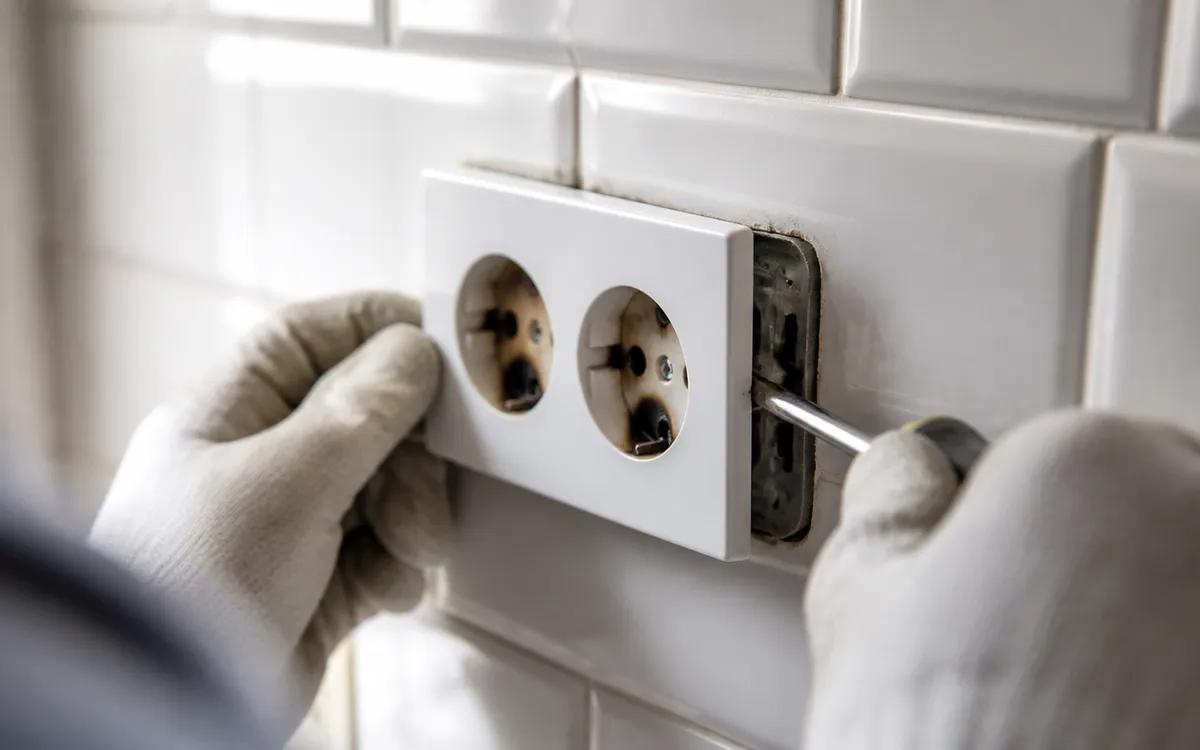
Burnt socket on a kitchen wall being taken apart by an electrician

Electrical hazard emergencies

Burnt socket or fuse box: what it involves

When a socket burns, it is hardly ever bad luck. The usual culprit is a connection that has worked loose over the years, a terminal that no longer grips the wire properly, an old socket whose contacts no longer hold the plug, or a high-consumption appliance plugged in where it shouldn't be: a radiator, an oven, a portable air conditioner or an extension lead with several appliances on it at once. The loose connection heats up, the plastic darkens and, if nobody acts, it ends up melting or catching fire.

Something similar happens in the fuse box: terminal screws that lose their tightness, old circuit breakers that no longer trip properly, cables too thin for the load they carry or damp that has got into the enclosure. The warning sign is usually a burning smell that comes and goes, a buzzing or crackling noise, or one protective device that is hotter than the ones next to it.

Cases and jobs

Burnt sockets, switches and fuse boxes we repair

The ones we are asked for most, with an explanation, followed by the other jobs in this service.

Burnt washing machine socket

A washing machine draws a lot of current while it heats the water and, if it is plugged into a loose socket or an extension lead, the contact overheats with every wash. The result is a blackened socket and sometimes the appliance's plug melted onto it. We replace the socket with a quality one, check that the cable feeding it is the right size and properly tightened and, if necessary, replace the plug as well. If the washing machine and tumble dryer share a socket, we separate them.

Burnt hob or oven socket

The hob and the oven are the most powerful appliances in the kitchen and run on their own circuit, with a 25 A socket or a direct connection box. When the connection works loose or the socket is not the right one, it heats up and burns from behind, inside the box, with nothing visible from outside until it smells. We dismantle it, cut the cable back to where it is sound, replace the socket or connection box and check that the circuit breaker matches the cable size.

Fuse box that smells of burning

A smell in the fuse box usually comes from a loose terminal on a circuit breaker or the RCD (trip switch), a protective device working at its limit or a cable whose insulation has been damaged by heat. We switch off the main switch, open the fuse box and look for the hot spot from the marks and the temperature of each component. We retighten or replace whatever is damaged and, if the fuse box is old and the faults keep recurring, we suggest replacing it with a new one with the circuits properly separated.

Melted extension lead or power strip

Many extension leads burn because they are used for things they are not designed for: an oil-filled radiator, a fan heater, an air fryer and a coffee machine all at once. The plastic softens and the contacts melt. We remove the extension lead, check the wall socket, which has almost always suffered too, and, if the room is short of sockets, install the ones needed so you don't have to rely on extension leads.

Burnt air-conditioning socket

In summer, air-conditioning units run for many hours at a stretch and, if they are plugged into a standard socket on a shared circuit, the connection ends up overheating. This happens a lot with portable units and with split systems that were installed using the nearest socket. We replace the damaged socket and, when the unit's power calls for it, run a dedicated line from the fuse box with its own protection, which is the right way to supply an appliance that works so many hours.

More cases we deal with

  • Burnt or melted light switch

    A switch that gets hot or crackles when you turn it on has a loose terminal or is carrying more load than it is rated for. We replace it and check the connections in its box.

  • Blackened water heater socket

    The water heater heats for hours and a loose contact ends up burning. We replace the socket or the direct connection and check the water heater's earth.

  • Socket burnt by a radiator or fan heater

    2,000 W heaters plugged into old sockets are a winter classic. We replace the socket and tell you which socket to use for each appliance.

  • Plug melted into the socket

    When the plug has fused to the socket, don't pull on it. We cut the power, dismantle the whole thing and replace both socket and plug.

  • Burnt circuit breaker or RCD in the fuse box

    A protective device with heat marks, or one that won't reset properly, has stopped protecting. We replace it with one of the correct rating and check the cable leaving it.

  • Crackling or buzzing inside the fuse box

    These are small arcs at a loose connection. We locate the terminal, retighten or replace it and check the tightness of every connection in the fuse box.

  • Burnt junction box in the ceiling or wall

    Joints made with insulating tape or old connector strips that overheat out of sight. We open it up, remake the connections with proper terminals and replace the damaged length of cable.

  • Burnt socket in a bar or restaurant kitchen

    Griddles, fryers and commercial dishwashers need sockets and lines designed for them. We replace the burnt socket and match the protection and cable size to the actual load.

  • Burnt three-phase socket in an industrial unit or workshop

    Compressors and welders connected to worn 16 or 32 A sockets. We replace socket and plug, check the tightness of the phases and how the loads are balanced.

  • Outdoor socket burnt by damp

    On terraces, in gardens and next to the pool, a socket without protection against water corrodes and burns. We replace it with a weatherproof socket and check the box.

  • Burnt fuse box in a holiday rental apartment

    Air conditioning, oven, water heater and hairdryer all at once on a small, old fuse box. We repair the damage and spread the circuits so it can cope with the season.

  • Burnt lamp holder or ceiling light

    Bulbs more powerful than the fitting can take, or lamp holders dried out by heat. We replace the part or the light fitting and check the lighting point.

What to do if a socket has burnt

Don't keep using that socket even if it seems to work: a contact that has already burnt heats up faster and faster. If there is smoke or fire, leave the room, call 112 and do not use water.

If you only notice the smell or see the socket blackened, switch off that circuit's breaker or the main switch before unplugging anything. Never touch a hot plug with the power on, and never with wet hands.

Take a photo of the socket and of the appliance's plug. It is useful for your home insurance and tells us what materials to bring.

Why sockets and fuse boxes burn

The most common cause is a loose connection: every time current flows, the point with poor contact heats up more than the rest, the metal oxidises and the contact gets worse. Next come overloads, when appliances adding up to more than its rating are plugged into a 16 A socket, and worn sockets that no longer grip the plug.

In homes built between the 1970s and the 1990s, other factors are undersized cables, joints made with tape, the lack of separate circuits for the kitchen and washing machine, and fuse boxes with just two or three breakers for the whole house. On terraces and in bathrooms and kitchens there is also damp, which corrodes the contacts.

Is a burnt socket dangerous? What the regulations say

Yes. A poor contact that overheats is one of the usual causes of electrical fires in homes. The circuit breaker protects the cable against overloads and short circuits, but it cannot detect a loose terminal heating up under normal current: that is why a socket can burn without anything tripping.

Spain's Low Voltage Electrotechnical Regulation (REBT), in its technical instruction ITC-BT-25, sets the minimum circuits for a home and the cable size for each: lighting, general-purpose sockets, cooker and oven, washing machine, dishwasher and water heater, and bathroom and kitchen sockets. When we repair a burnt socket we check that its circuit meets these requirements, because very often the underlying problem is that it doesn't.

What you get

What you get when we do it

  • We find the cause

    We don't just change the socket: we check the cable, terminal and protection so it doesn't burn again.

  • The right materials for the appliance

    16 or 25 A sockets, weatherproof or three-phase, with terminals that grip the cable properly.

  • The whole fuse box checked

    If the fault is in the fuse box, we retighten every connection, not just the one that failed.

  • Report for your insurer

    We give you a written record, with photos, of what burnt and what we replaced.

How we work

How we fix it, step by step

  1. You describe what you see

    Through the form or by email: which socket or which part of the fuse box, what was plugged in and a photo if you can.

  2. We cut the power and open it up

    We isolate the circuit, dismantle the damaged point and see how far the heat has spread.

  3. We fix the cause

    We replace the socket, cable, box or protective device and correct the overload or loose connection.

  4. We test under load

    We plug in the appliance that caused the fault and check that nothing heats up.

Frequently asked questions

Questions about burnt socket or fuse box

There's a burning smell coming from a socket. What should I do?

Stop using it and switch off that circuit's breaker or the main switch before touching the plug. If you see smoke or fire, get out and call 112. Then write to us with a photo: we will check the socket, the box and the cable feeding it.

Can I keep using a burnt socket?

No. Even if it still supplies power, the contact is already damaged: the metal has oxidised, the plastic has lost its properties and it will heat up more each time. The socket needs replacing and the cable checking, as the last few centimetres are often damaged too.

The fuse box smells of burning but everything works. Is it serious?

Yes, it should be checked as soon as possible. It is usually a loose terminal or a protective device that is overheating, and that can end in the whole fuse box failing or a small fire inside the enclosure. We open the fuse box with the power off, locate the spot and repair it.

Does home insurance cover a burnt socket?

Many policies cover electrical damage to the installation and to appliances, each with its own terms. We give you a report of what we found and replaced, with photos, so you can make a claim with your insurer.

What kind of socket do the washing machine, oven or hob need?

The washing machine, dishwasher and water heater go on their own circuit with 16 A sockets; the oven and hob go on the cooker circuit with a 25 A socket or a direct connection. If in your home they hang off the general sockets or an extension lead, we put it right.

You may also be interested in

Related services

RCD keeps tripping

RCD or breaker tripping with the oven, water heater, air conditioning or for no obvious reason: we test the insulation and eliminate the leak.

See the service

Where

Areas where we do it most

As well as Murcia and its districts, we handle it with home call-outs in these areas.

Is it happening right now?

Tell us what is happening, where it is and a phone number. In the meantime, if there is a burning smell, sparks or water, switch off the main switch only if you can do it safely.