Skip to content
electricistaentrevegas.comReport a fault
Menu

RCD keeps tripping: we find the leak and leave your consumer unit stable

If the RCD or a breaker trips again and again, won't stay up or cuts out when a particular appliance starts, there's a cause that can be measured. We look for it circuit by circuit and appliance by appliance, and eliminate it so your consumer unit stops tripping.

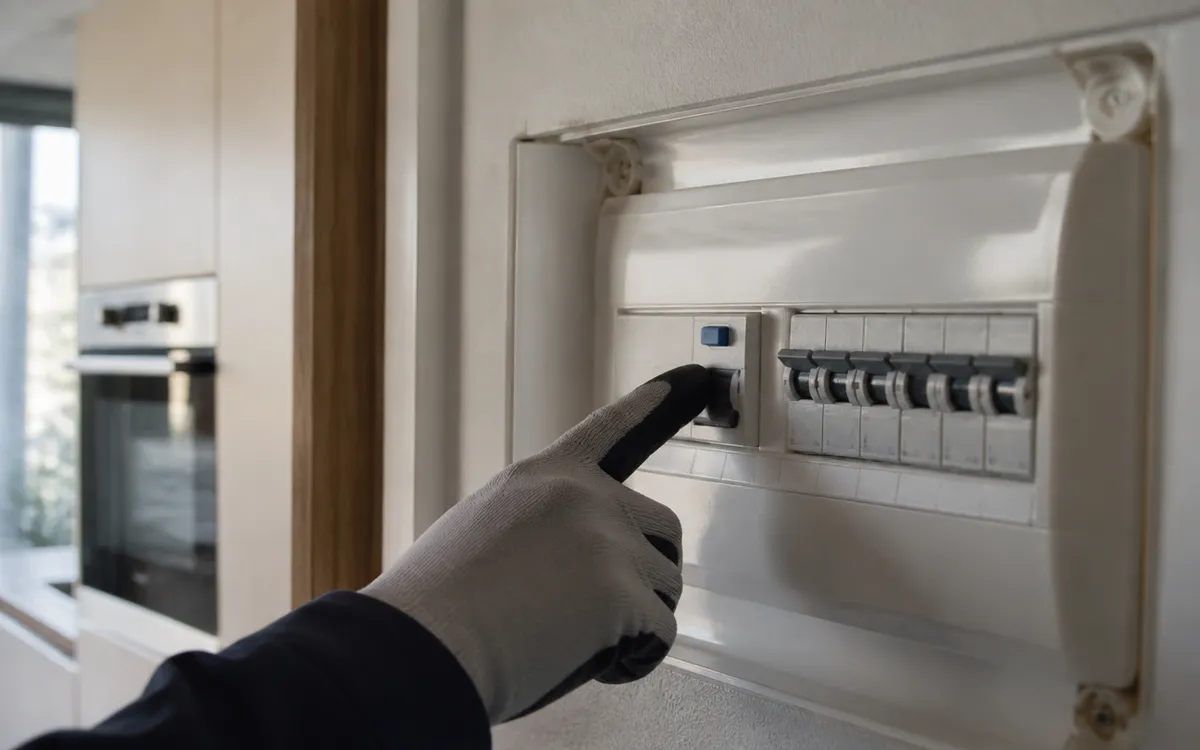
RCD tripped in a kitchen consumer unit while the electrician looks for the leak from the oven

No power or equipment down

RCD keeps tripping: what it involves

There are two protective devices in the consumer unit that people confuse. The RCD (diferencial), the one with a test button marked T, cuts the power when part of the current escapes to earth: a faulty appliance, damp or a damaged cable. The circuit breakers, one per circuit, cut out due to overload or short circuit. Knowing which one trips already points towards the fault.

An RCD tripping is a warning: it's protecting you from an electric shock and from a fire caused by leakage. That's why we never replace it with a less sensitive one or bypass it. We test the insulation of each circuit, check the appliances connected to it and find the exact point of the leak.

We see it every day with ovens and water heaters full of limescale, air conditioners exposed to sun and salt air, gardens, pools, shops full of electronics and second homes on the Mar Menor and in Torrevieja, and also when it trips in the early hours or with the house empty.

Cases and jobs

RCD and circuit breaker tripping problems we solve

The ones we are asked for most, with an explanation, followed by the other jobs in this service.

RCD trips when you switch on the oven

Oven heating elements absorb moisture when they go unused for a while or when their sheath cracks, and when they heat up they leak current to earth. The connection box behind the unit can also fail. We test the oven and its line separately, replace the affected element or connection and check that the RCD holds with the oven on full.

RCD tripping with the electric water heater

With the hard water in Murcia and on the coast, the water heater's element works encased in limescale until it perforates. From then on the RCD trips every time the thermostat switches on, often in the early hours if it heats during off-peak hours. We test the element and thermostat, replace them and remake the connection, which is often corroded by drips from the valve.

Trips when the air conditioning starts

Water or salt air gets into the outdoor unit's terminal box or the interconnecting cable, and the leak appears when the compressor starts. With inverter units, the electronics also add small leaks to those from the rest of the house. We dry and seal the connection, replace the damaged cable and, where appropriate, give the air conditioning its own RCD of the right type.

Consumer unit found tripped when nobody is home

Nobody sees the moment it trips, so we go through everything that runs on its own: a timed water heater, fridge and freezer, pool pump, irrigation, outdoor lights on a timer and terrace sockets in the night-time damp. We test those circuits and, if the property stands empty for long periods, we put the fridge and freezer on their own RCD with automatic reclosing.

RCD tripping for no obvious reason

It's usually several small leaks adding up on the same RCD: computers, televisions, chargers and LED drivers. Other times the switch itself, old or damaged by a surge, trips earlier than it should. We measure the leakage on each circuit, test the RCD with a trip tester and either redistribute circuits or replace it with a high-immunity (superinmunizado) type.

More cases we deal with

  • RCD won't stay up: it trips as soon as you lift it

    There's a direct leak: an appliance with water in it, a punctured cable or a flooded box. We isolate the culprit circuit, restore power to the rest and repair the fault; if it trips with no circuits connected, we replace the RCD.

  • Breaker trips when the washing machine and oven run together

    That's overload, not leakage. We put the large appliances on their own circuits with the cable size and rating required by Spain's low-voltage regulations (REBT).

  • Washing machine or dishwasher tripping the RCD

    It's usually the heating element, the drain pump or a socket wetted by the hose. We repair the socket and tell you which part of the appliance needs replacing.

  • Fridge or freezer tripping the RCD

    The defrost heater and condensation water are the usual suspects. We test it and put the fridge or freezer on a separate protected circuit.

  • RCD tripping when it rains

    Water gets into outdoor sockets, wall lights on the façade or garden lights. We dry them out, replace anything corroded and fit weatherproof boxes and fittings.

  • Trips with the pool pump

    We test the pump, the pool control panel and the light transformer, which all work amid damp and chlorine, and eliminate the leak.

  • RCD tripping with the automatic irrigation

    Solenoid valves, the controller's transformer or an unprotected buried cable. We redo the section with cable and watertight joints suitable for burial.

  • Tripping during storms

    Surges from nearby lightning trip and sometimes damage the RCD. We replace it if it has been affected and fit surge protection.

  • RCD that doesn't trip when you press the test button

    That's worse than one that trips too often, because it no longer protects you. We replace it and check that the new one trips at its rated sensitivity.

  • Shop with lots of equipment tripping the RCD

    In shops, offices and hair salons, leaks from computers, card terminals, hairdryers and LED spotlights add up. We spread the circuits across several high-immunity RCDs.

  • A single RCD that plunges the whole house into darkness

    Any leak switches everything off. We split the installation across two or more RCDs so a fault only affects its own area.

What to do when the RCD trips

If a breaker has tripped, switch off whatever was running on that circuit and push it up once. If it's the RCD, without opening the consumer unit and with dry hands:

  • Unplug the appliances that were running and push it up just once.
  • If it trips again, switch off all the breakers, push the RCD up and then switch the breakers back on one at a time.
  • The one that makes it trip is the circuit with the leak: leave it off and the rest will keep working.
  • If it trips with all the breakers off, don't try again.
  • If there's water near the consumer unit, a burning smell or an appliance smoking, don't touch anything and let us know.

Typical causes of an RCD tripping

It nearly always comes down to a handful of causes; what changes is where and when they appear.

  • Faulty heating elements in ovens, water heaters, washing machines, dishwashers or fridges.
  • Damp in terrace sockets, garden lights and walls with water ingress.
  • Small leaks from electronic equipment adding up.
  • Cables damaged by a drill bit, a nail or rodents.
  • Neutrals shared between circuits on different RCDs after piecemeal renovations.

RCD or circuit breaker: which one trips and what it means

The circuit breaker protects the cable: it cuts out due to overload when you run too many appliances at once, or due to a short circuit, suddenly and with a snap.

The RCD protects people: it compares the current going in with the current coming back and, if a little is missing, it cuts the power. Homes use 30 mA RCDs, and they should never be swapped for a higher-milliamp one just to stop them tripping.

What you get

What you get when we do it

  • The cause, not a patch

    We don't fit a less sensitive RCD or bypass it: we eliminate the leak.

  • Real insulation testing

    We test every circuit and every appliance until we find the exact point.

  • A better-organised consumer unit

    Several RCDs so a fault doesn't switch off the whole house.

  • Refrigeration on its own

    Fridge and freezer on their own protection so you don't lose food.

How we work

How we fix it, step by step

  1. Tell us the pattern

    What trips, with which appliance, at what time and since when, via the form or by email.

  2. We test circuit by circuit

    Insulation, leakage while running and an RCD test with a trip tester.

  3. We eliminate the leak

    We repair the box, cable, socket or connection and replace the damaged protective device.

  4. We test with everything on

    Oven, water heater and air conditioning at once: the consumer unit has to hold.

Frequently asked questions

Questions about rCD keeps tripping

Why does the RCD trip when I switch on the oven?

Almost always because of a heating element that has lost its insulation, from damp or because its sheath has cracked; if it happens mainly after weeks without use, that's almost certainly it. It can also be the connection box behind the unit. We test the oven and its line separately.

Why does the RCD trip when I'm not at home?

Because some appliances run on their own, such as a timed water heater, the fridge and freezer, the pool pump, irrigation or lights on a timer, and because night-time damp affects outdoor sockets and lights. We check those circuits and, in homes that stand empty for long periods, recommend an RCD with automatic reclosing for refrigeration.

The RCD trips now and then. Is it dangerous?

While it trips, it's protecting you. The danger is getting used to it, bypassing it or fitting a less sensitive one: an intermittent leak usually gets worse and, if it comes from damp or a damaged cable, it can end in a short circuit.

Why does the air conditioning trip the RCD?

Because of water or salt air in the outdoor unit or its cable, or because leaks from the inverter electronics add up with those from the rest of the house. We seal the connection and, if needed, give the air conditioning its own RCD.

The RCD trips with the electric water heater. Do I need a new water heater?

Not always. Most often it's the heating element, perforated or coated in limescale, which can be replaced without touching the tank. If the tank is leaking water, it's worth replacing the whole unit.

Can I fit a less sensitive RCD so it stops tripping?

No. In homes the REBT requires 30 mA RCDs, which are the ones that protect a person from an electric shock. What can be done is to split the circuits across several RCDs and use high-immunity ones where there's a lot of electronics.

You may also be interested in

Related services

Earth leakage

Electric shocks from the shower, taps, appliance casings or railings: we trace the current leak, isolate it and check the earthing.

See the service

No power at home

Total or partial outage in a home, residential building, shop or warehouse: we find where the current is interrupted and restore the supply.

See the service

Is it happening right now?

Tell us what is happening, where it is and a phone number. In the meantime, if there is a burning smell, sparks or water, switch off the main switch only if you can do it safely.